More than human tangible telepresence · made through enquiry
SCENTLINK
Timeline
Nov 2025 – Ongoing
Discipline
Research through design · More than human interaction
Collaboration
Created with Yutong (Yuyu) Li, Inna Krachun, Yi (Alyssa) Qu
Context
Set brief · Collaborative
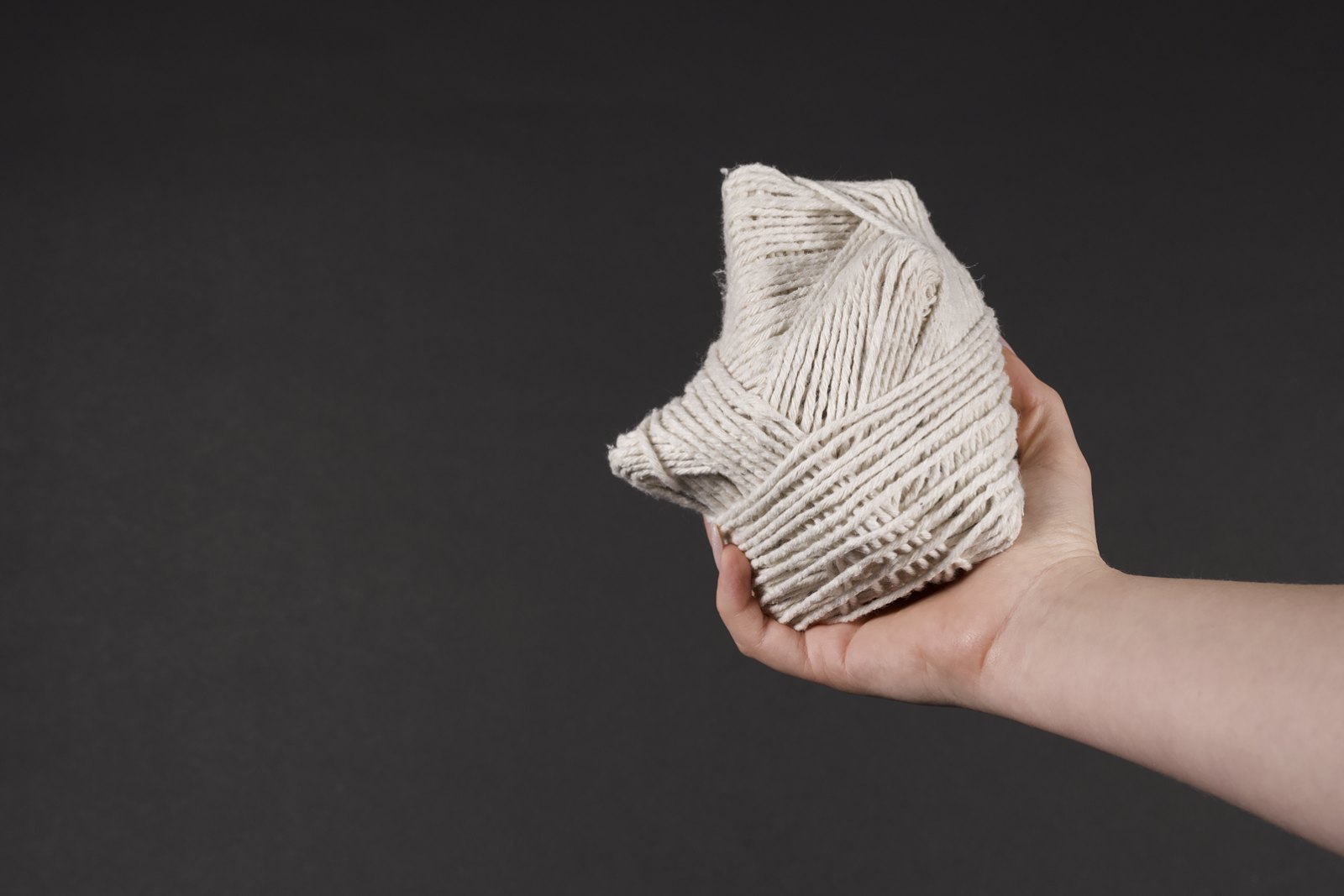
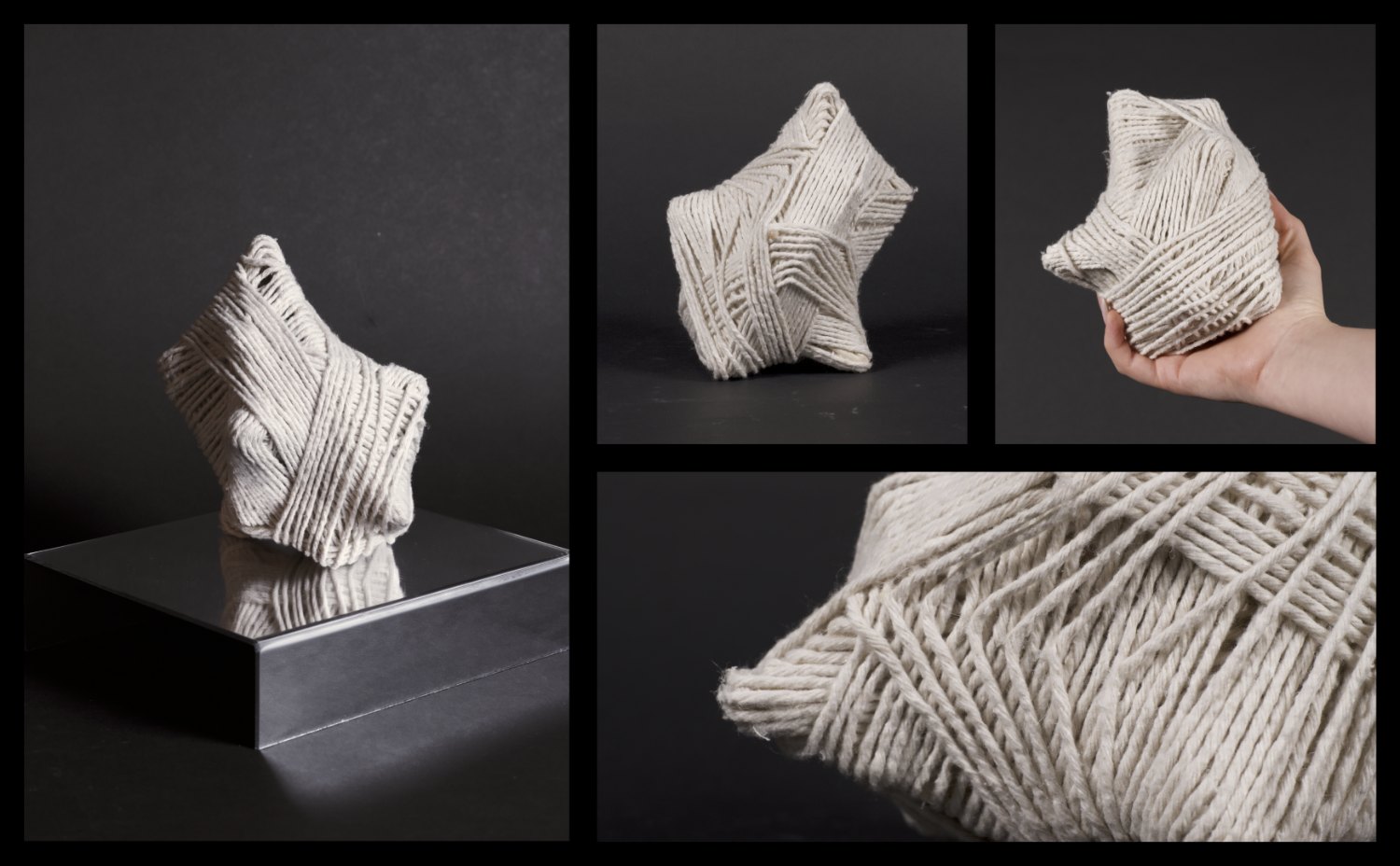
SCENTLINK, the owner’s object, woven to be held.
Living with a dog changes what “going out” means. Before the keys and the door, there’s a small negotiation: making sure someone you care for can handle your absence.
SCENTLINK looks at the routine of separation that humans and dogs share every day. It is shaped by time, space, scent, anticipation, and the stories people tell themselves about how their dog is coping. We started by watching what dogs actually do when people leave, then asked how human reassurance, and the “care scripts” built into pet technology, might help, simplify, or quietly disrupt those rhythms.
Behaviour firstPrototype as enquiryLow intrusionCare without overstimulationTangible support
01
Observe
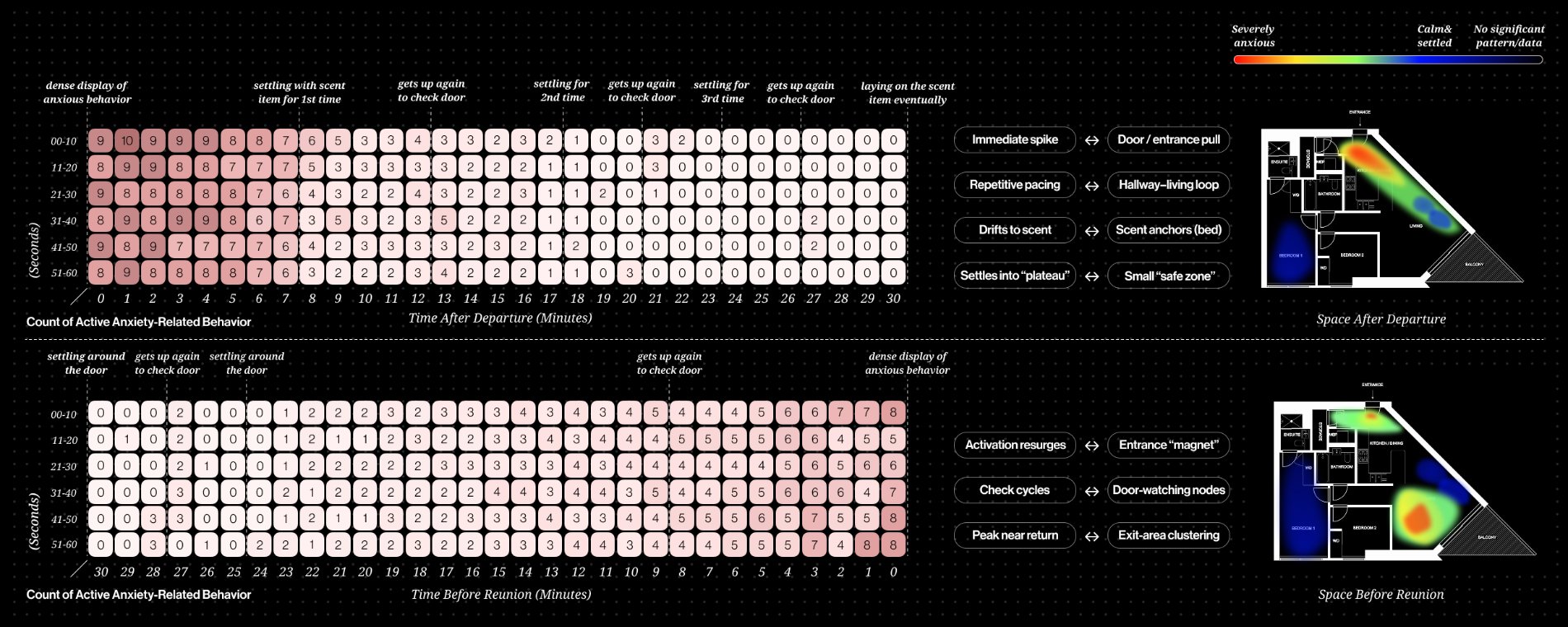
We logged what dogs actually do in the minutes after a departure and before a reunion, at home. A pattern repeated: an early spike at the door, repetitive pacing, a drift toward scented anchors, and a slow settle into a “plateau”. As the return approached, the loop ran in reverse and anxiety resurged near the door.
Anxiety related behaviour, mapped over time and across the space of the home.
02
Frame
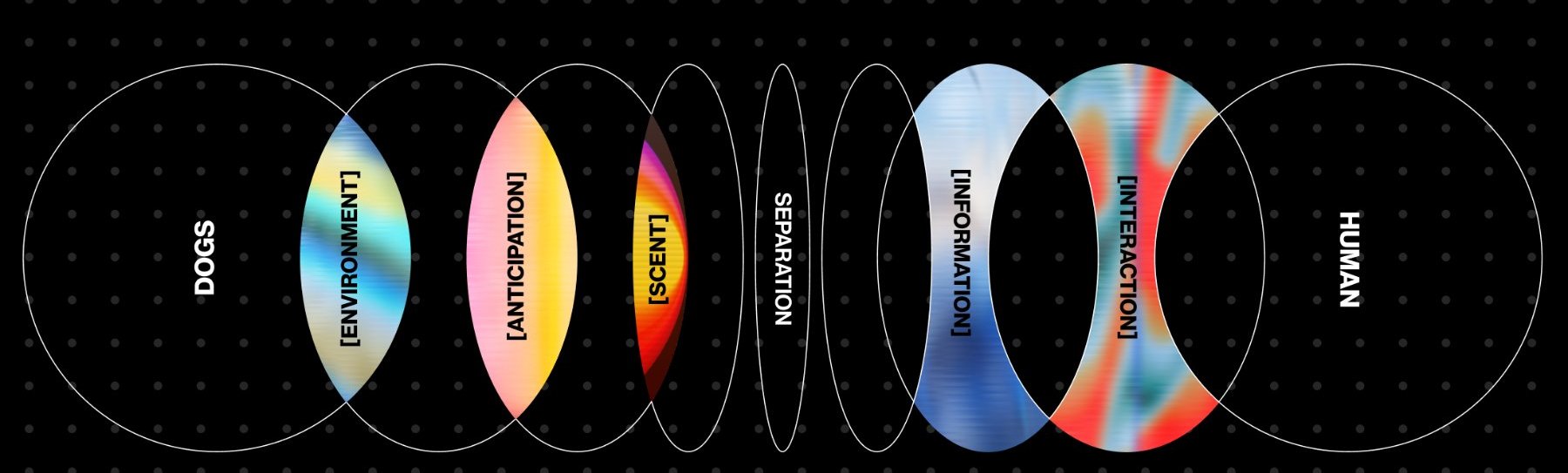
To keep the making grounded, we turned what we saw into a simple working model. Separation is the narrow point where signals fall out of sync, and each side compensates in its own way. On the dog side, three things kept repeating: scent, environment, anticipation. On the human side, two: information and interaction.
The separation loop, where the dog’s signals and the owner’s signals fall out of sync.
03
Probe
The first prototype, Twin Objects, tested whether a dog and owner could stay connected through quiet physical gestures instead of cameras or screens. One form is left behind with the dog, the other is a handheld companion for the owner. They are paired in meaning but speak a different physical language on each side.
Twin Objects, an early test of shared presence between dog and owner.
04
Test
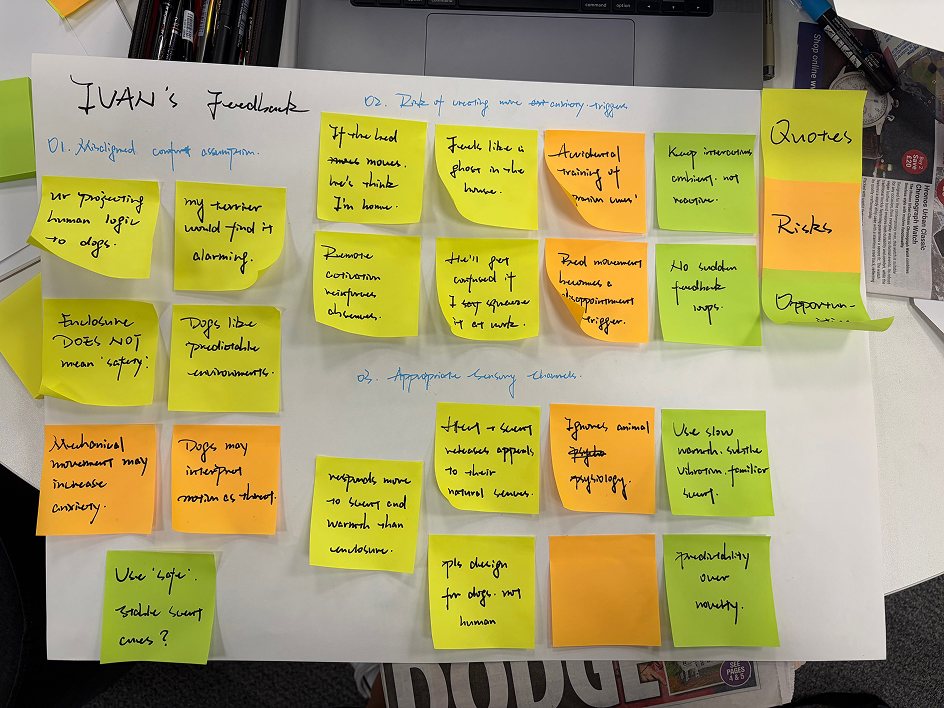
Talking through the idea in person with dog owners surfaced the central risk. A moving, responsive object can read as a threat. Owners told us that bed movement becomes a separation trigger, that a dog may read motion as something to guard against, and that repeated comfort can quietly train new anxiety. The conversations pointed toward predictability over novelty, and toward slow warmth, subtle scent, and familiar cues.
Feedback session: surfacing assumptions, risks, and the right sensory channels.
05
Refine
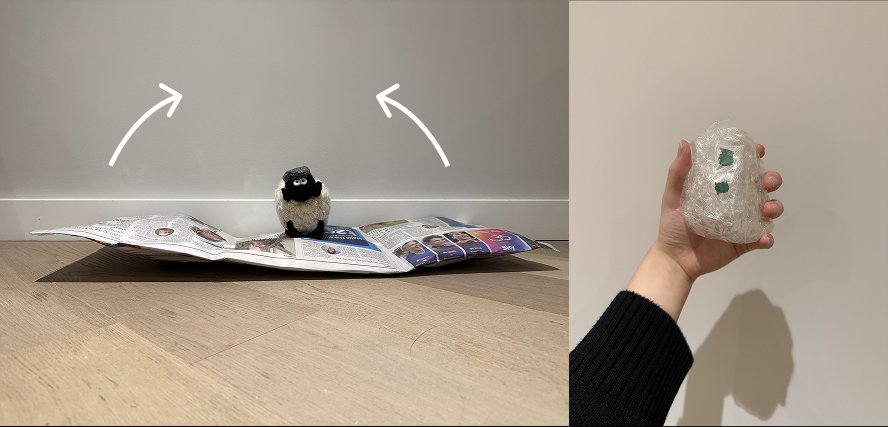
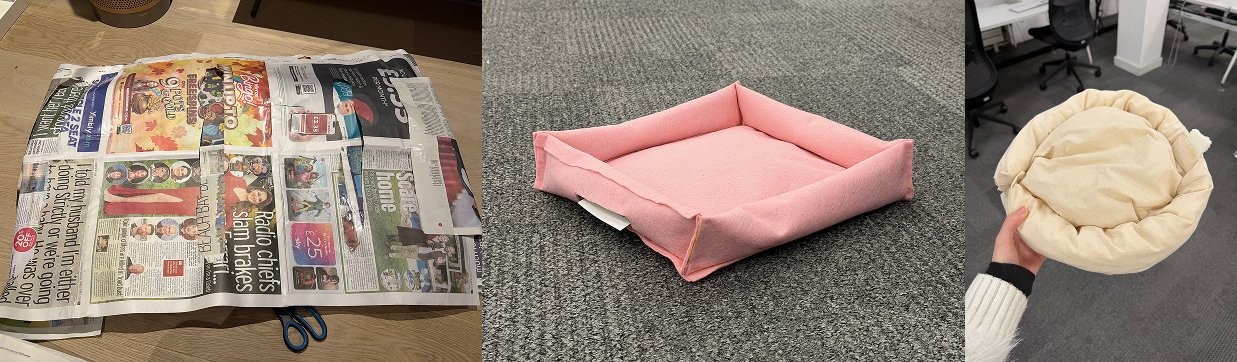
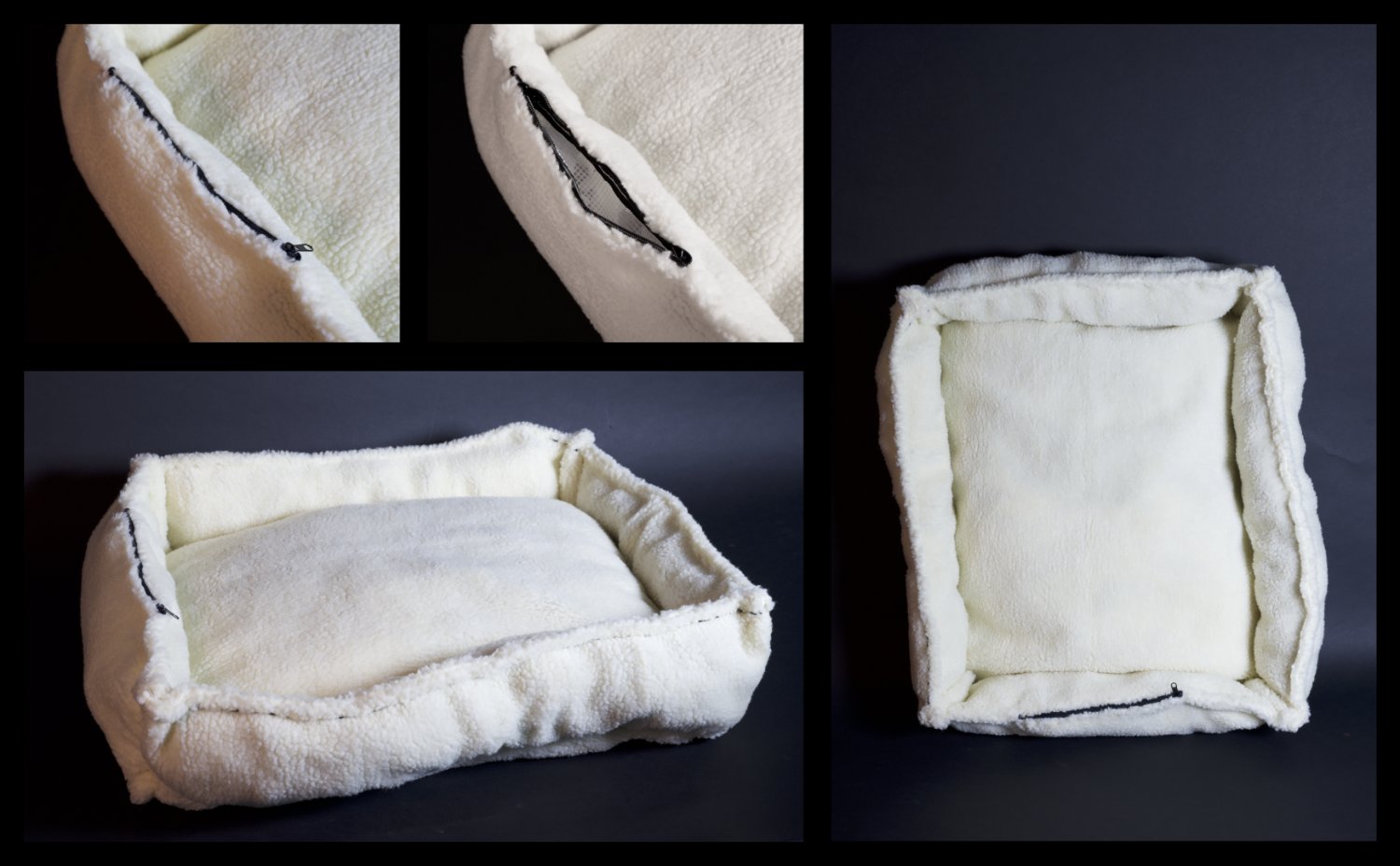
Feedback reshaped the dog’s object. The early fabric bed moved and responded, and that was exactly the part that could misfire, so it became the focus of the next round. We dropped the mechanical movement in favour of a calmer bed that holds scent and releases it slowly, and changed the scent itself from a card to a refillable wax insert warmed by gentle heat. The bed stays built around the dog, and its presence stays timed rather than constant.
Refining the dog bed, away from movement and toward a calm form that simply holds scent.
06
Resolve
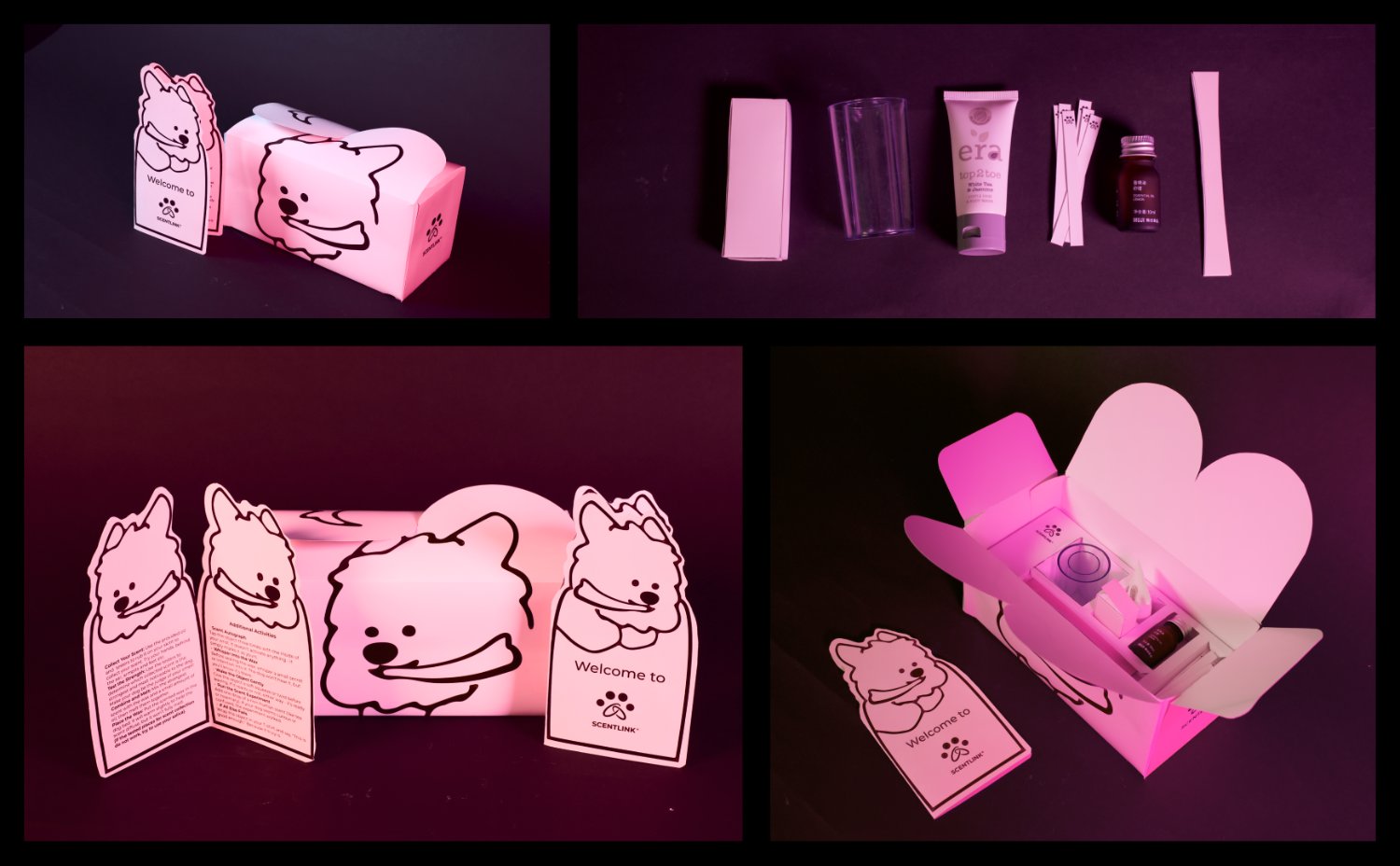
The resolved direction keeps everything object based and ambient. The dog keeps a calm, scented bed, the owner keeps a soft handheld companion, and a small kit ties the two together. There are no screens, and nothing to check. It is support that sits in the background of a home and waits to be noticed.
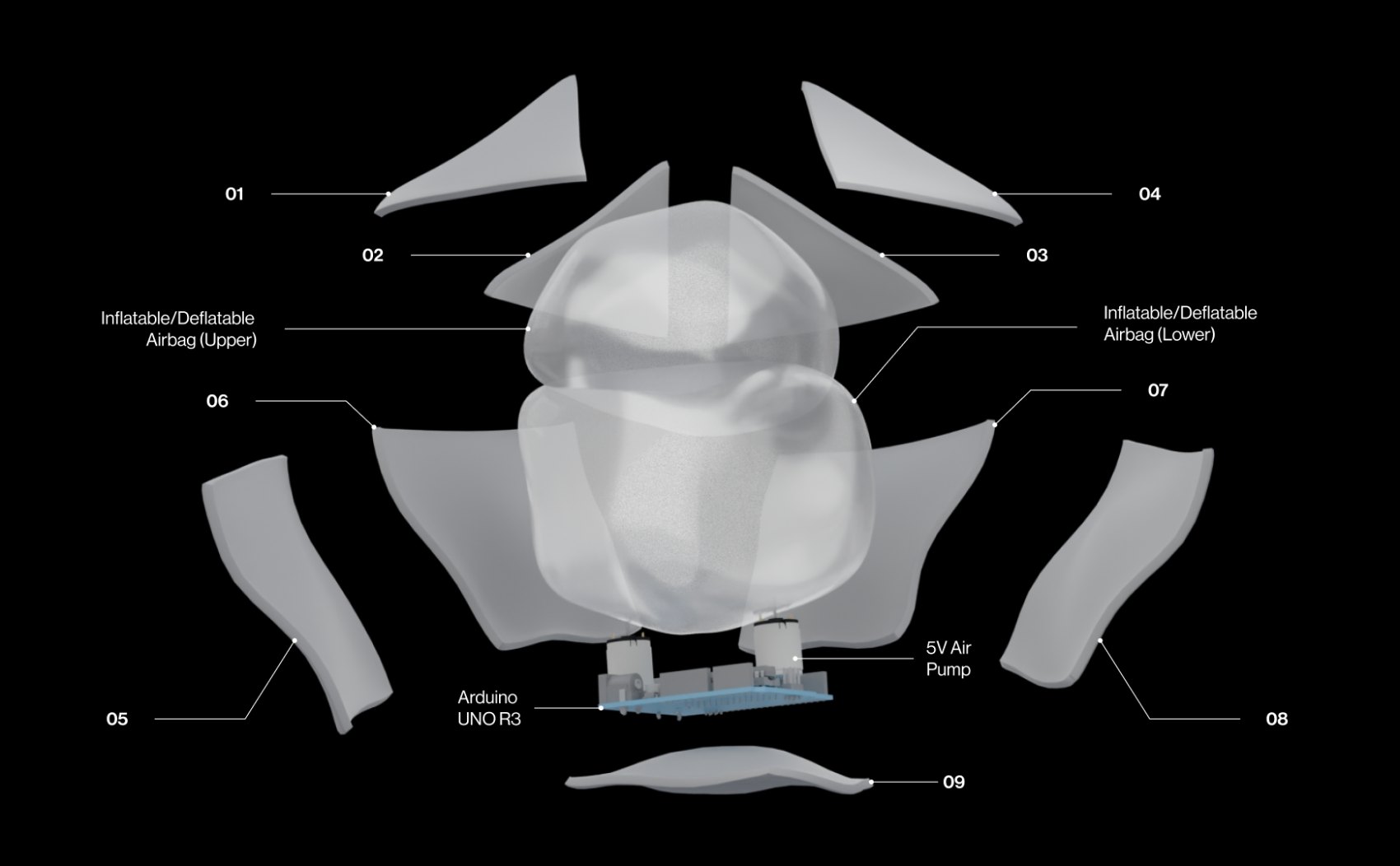
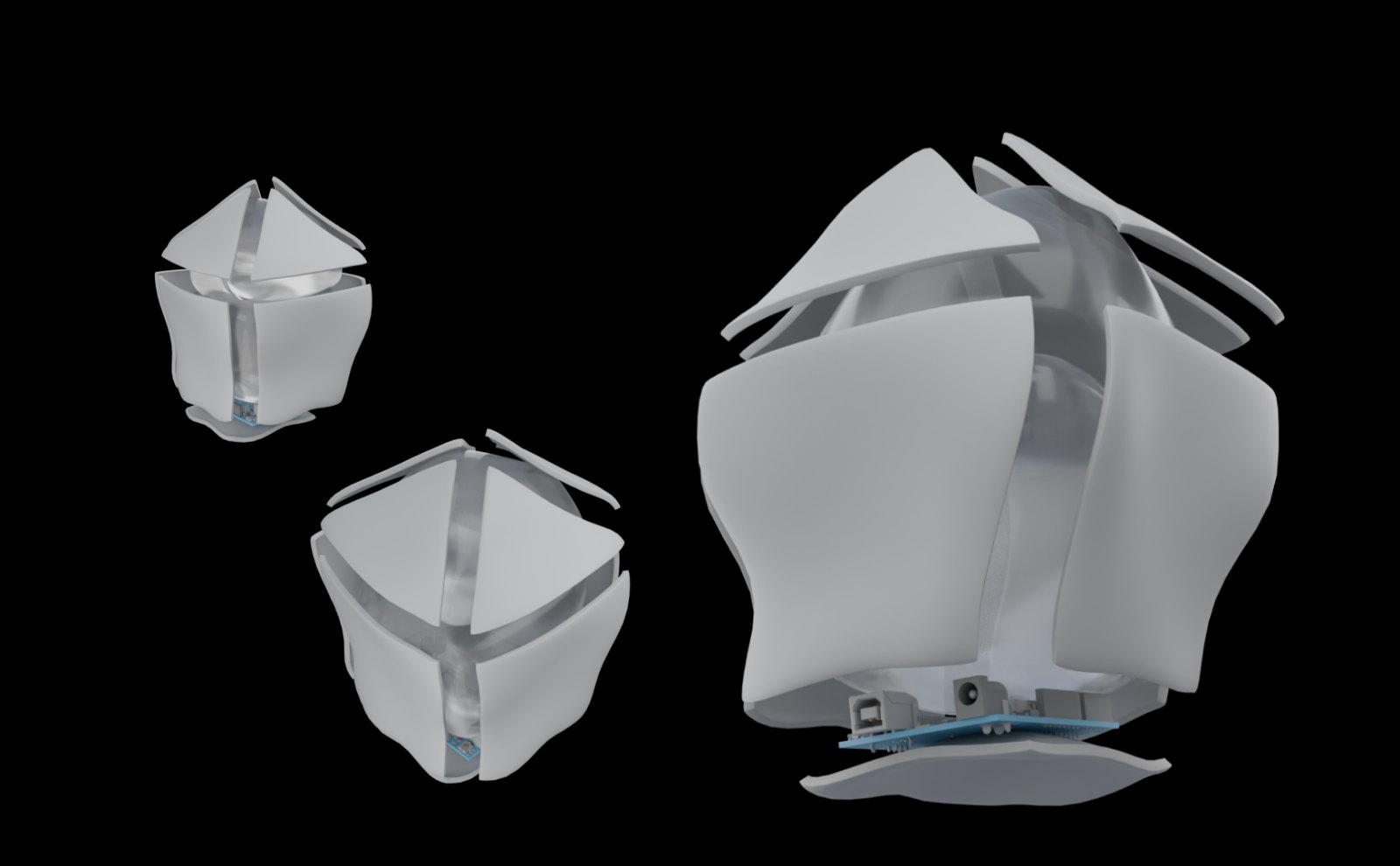
The owner’s object: held, woven, kept close.The dog bed: soft, openable, made to hold scent.The kit, which introduces the ritual at home.Inside the object: inflatable airbags, a small pump, and a microcontroller.Resolved form studies.
Across the project the question shifted, from connecting a dog and owner toward supporting a rhythm: a quiet, scented presence that asks for less attention.